
How to compare equipment quotes and build the opening budget
Compare equipment by the total cost and timing required to make it usable for your operating format. Align specification, condition, delivery, installation, commissioning and required accessories before deciding which quote costs less.
What you will produce: A comparable two-quote cost calculation and a supplier commitment record.
Updated September 6, 2026 · Worked examples and editable worksheets
What to have ready
Start with the output the business needs to deliver and the premises constraints. Gather quotes for the same capacity and installation scope. Every example amount below is authored, not a current supplier price.
Work through the calculation and decision
How do you write a comparable equipment brief?
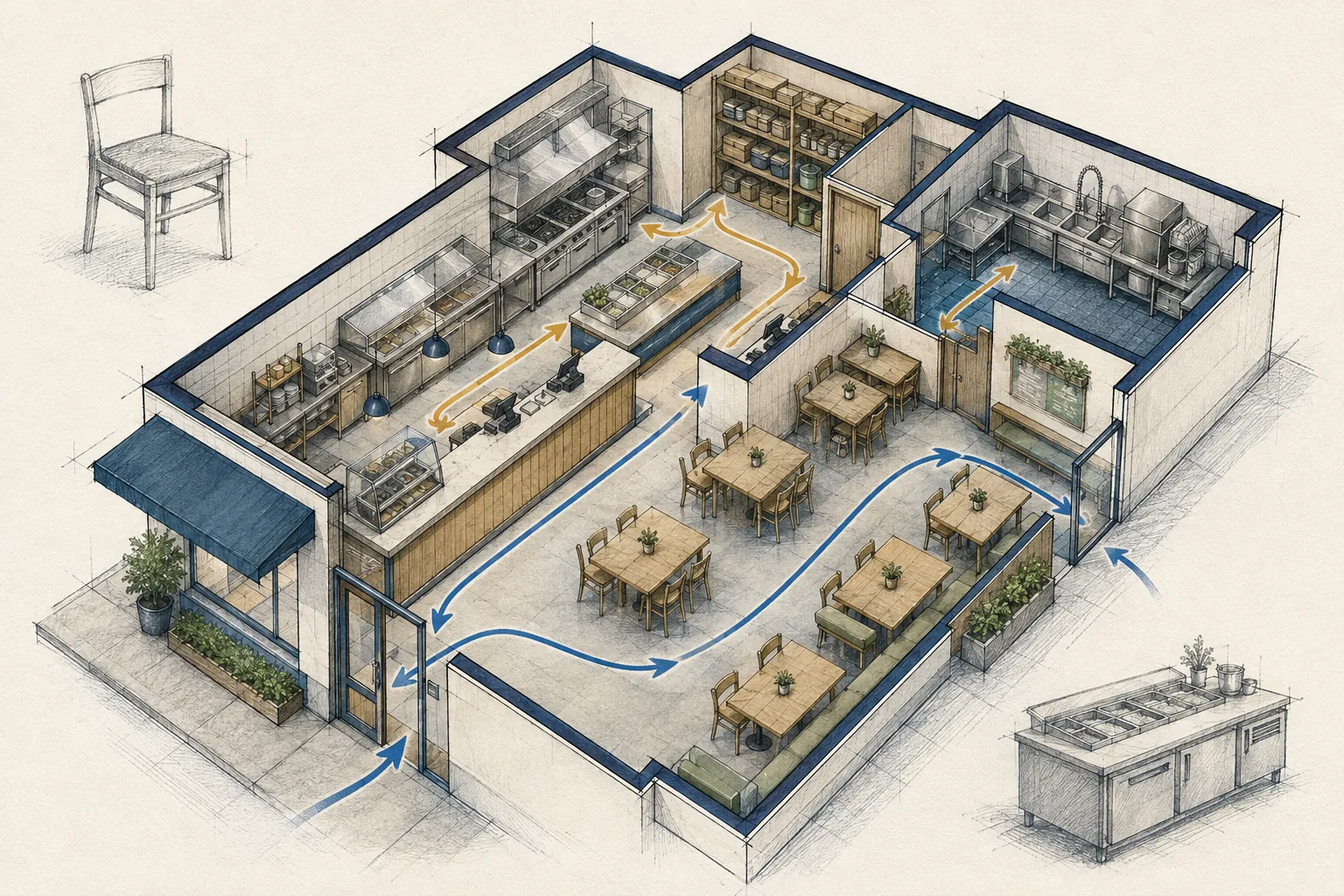
Specify the customer workload, required throughput, usable capacity, utilities, dimensions, access and installation location. Explain the operating conditions and what is included in a usable handover. Ask each supplier to identify exclusions against that same brief.
Record whether equipment is new or used, its condition, warranty, maintenance needs and the basis of any performance statement. A cheaper used unit and a new unit with support may be legitimate alternatives, but the cost comparison should retain those differences.
Which costs belong beside the advertised price?
Add delivery, unloading, installation, setup, necessary accessories, opening consumables and applicable taxes or other charges where they are required and not already included. Separate premises upgrades from the equipment quote while linking the dependency. Count each shared installation item only once across the full budget.
Mark missing scope as unknown rather than entering zero. If operating energy, servicing or downtime materially differs, compare those consequences over a stated period as an additional view. The two-quote calculator below compares entered acquisition and setup cash only.
How do payment terms affect the opening plan?
Record deposit, progress and final payments with their triggers and dates. Identify the earliest irreversible commitment, what must be confirmed before it and what happens if delivery or the premises schedule changes. Put each installment into the cash forecast in the week it is paid.
Check that extra capacity addresses a measured operating constraint. Equipment that increases one stage may leave another unchanged. Rehearse the expected workload or obtain appropriately scoped performance evidence before using additional output in the revenue plan.
The $8,000 advertised option costs more when usable
These authored quotes are assumed comparable in required capacity and basic scope for the purpose of the arithmetic. Actual condition and service differences require separate review.
| Required cost | Quote A | Quote B |
|---|---|---|
| Equipment | $8,000 | $9,600 |
| Delivery | $400 | $0 included |
| Installation and setup | $2,400 | $1,000 |
| Other required costs | $1,200 | $300 |
| Usable-scope total | $12,000 | $10,900 |
What this changes: Quote B is $1,100 lower on the entered acquisition scope. A different warranty, site-work requirement or payment date could still change the decision. Obtain those terms before choosing on price.
Illustrative amounts are rounded for display. Use the full inputs and stated units when recalculating; an approximate threshold is not itself a sufficient activity prescription.
Compare two quotes at usable scope
Start with the worked inputs, then change a value to test your own scenario. All money amounts are in USD. The result updates in this tab.
Enter the complete usable cost of each quote, including delivery and installation. A lower total does not establish equivalent capacity or warranty.
Calculations keep the full entered precision; displayed amounts are rounded independently. A blank, out-of-range or disallowed fractional count clears the result. Reset example restores the exact worked inputs. JSON and CSV downloads contain that same valid scenario; the worksheet download also includes your evidence and decision.
Illustrative result · assumptions apply
- Quote A at entered usable scope
- $12,000.00
- Quote B at entered usable scope
- $10,900.00
- A minus B
- $1,100.00
A cost difference is meaningful only after capacity, condition, warranty, required approvals and installation scope are comparable.
Complete your decision record
A comparable two-quote cost calculation and a supplier commitment record. Enter the finding or number, the source and the next action for each row. “Supported” records your assessment of that item; it does not approve the business or certify completed research.
| Item and what to record | Your finding and evidence | Status and next action |
|---|---|---|
| Operating requirementThroughput, workload, dimensions and required utilities | ||
| Quote identitySupplier, specification, condition, date and validity | ||
| Complete scopeEquipment, delivery, installation, setup and required extras | ||
| ExclusionsUnknown costs, premises work and responsibility | ||
| PaymentsAmount, trigger, date and cancellation or refund terms | ||
| SelectionComparable total, material differences and next verification |
6 items have no evidence recorded yet.
Entries are temporary and are not sent to us or saved automatically. Download your completed work before leaving or refreshing this page.
Choose your next action
| If your finding is… | Your next action |
|---|---|
| One quote excludes required scope | Complete or separately price that scope before comparing totals. |
| A utility or access condition is unresolved | Resolve it before placing the dependent order. |
| The added capacity does not address the bottleneck | Revisit the purchase against the tested operating plan. |
Errors that can change the result
- Comparing list prices with different installation scope.
- Counting a shared fit-out item in every equipment line.
- Treating supplier capacity as demonstrated customer demand.
Apply this to your business
Choose the matching format and check its customer unit, paid team and evidence limits.
Restaurant
48-seat counter-service restaurant
Open the operating guide and state profiles →Coffee Shop
Independent coffee shop without a drive-through
Open the operating guide and state profiles →Hair Salon
Three-stylist employee salon with booked appointments
Open the operating guide and state profiles →Auto Detailing Business
Two-technician fixed-site detailing studio
Open the operating guide and state profiles →Cleaning Business
Two-person commercial cleaning team with recurring accounts
Open the operating guide and state profiles →Use the usable-scope amount and actual installment dates in the opening cash plan. Values entered here are not automatically transferred to another calculator.
Continue with the next part of your plan
- What to check before committing to business premises
A comparable premises cost summary and a list of conditions to resolve before the next commitment.
- How to build a startup budget you can actually fund
A funding total, a dated payment ledger and a clear amount still to arrange.
- How many clients can your salon or detailing business serve?
A daily service ceiling, monthly revenue scenario and a capacity check against operating cash break-even.
Sources and limits
The sources below provide the stated background. The worked examples, calculator defaults and decision exercises are authored teaching material. They do not establish market prices, local demand, legal applicability or completed state research.
- SBA: managing a business
Accounting, staffing and asset-planning background.
Source background and its scope are stated above. The guide update date does not change a source observation period. Research and review standards · Report an issue
When you need a longer financial plan
Use a financial model to organize a broader forecast after defining your own operating assumptions. The site’s research, your worksheet entries and any purchased workbook are separate; entries are not transferred automatically.
Financial models